Buy futureskills.eu ?
We are moving the project
futureskills.eu .
Are you interested in purchasing the domain
futureskills.eu ?
domain@kv-gmbh.de · 0541-91531010
Buy futureskills.eu ?
What is equivalence?
Equivalence refers to the state of being equal or interchangeable in value, function, or meaning. In mathematics, equivalence is used to denote that two expressions or equations have the same value or meaning. In other contexts, equivalence can refer to the similarity or comparability of two things. Overall, equivalence implies a relationship of equality or similarity between two or more entities. **
What are equivalence classes?
Equivalence classes are sets of elements that are considered equivalent based on a specific relation or criteria. In mathematics, equivalence classes are used to partition a set into subsets where each element in a subset is considered equivalent to every other element in that subset. Equivalence classes help to simplify complex structures and make it easier to analyze and understand relationships between elements. **


Similar search terms for Equivalence
Top-Angebote
Products related to Equivalence:
-
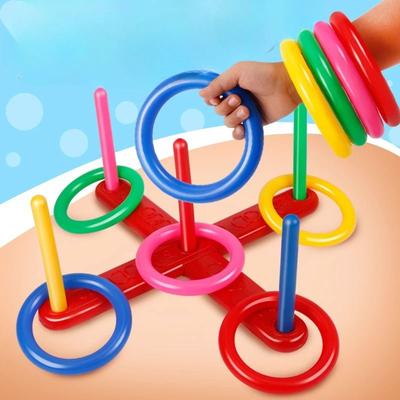
Uplifted Finds Interactive Ring Toss Training System Professional Early Education & Pediatric Fitness Infrastructure Interactive Ring Toss Training System Professional Early Education & Pediatric Fitness InfrastructureCommand ultimate developmental confidence with the Interactive Ring Toss Training System, a highperformance educational solution specifically engineered to act as a comprehensive tool for elite organization and superior technical ergonomics. Built...52,97 $*Shipping: 0,00 $Secure redirect to the provider
-
Logitech Crayon for Education USB-C Digital Pencil for iPad - Classic Blue (914-000080)This Bluetooth-enabled stylus is compatible with a wide range of iPad models including iPad Pro, iPad Air, and iPad mini. Key features include tilt sensitivity, palm rejection technology, rechargeable battery, and 1.2-meter drop protection. The device weighs just 20 grams and comes with a 3-year warranty.101,99 £*Shipping: 0,00 £Secure redirect to the provider
-
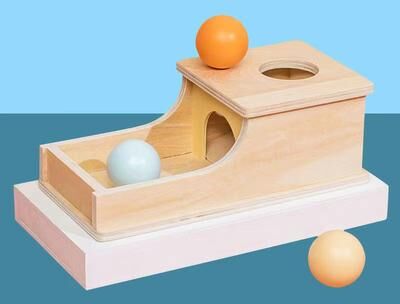
Tiny Tots Teens Trends Drawer Game Early Education Montessori Wooden Pitch Ball Box Preschool Learning Training Toy Drawer Game Early Education Montessori Wooden Pitch Ball Box Preschool Learning Training ToyThis Montessori Wooden Pitch Ball Box Drawer Game is a thoughtfully designed earlyeducation toy that transforms playtime into purposeful learning. Crafted for toddlers and preschoolers, it offers a handson, engaging way to support key developmental...39,97 $*Shipping: 0,00 $Secure redirect to the provider
-
Tiny Tots Teens Trends Montessori Baby Training, Infant Puzzle Early Education Toys, Busy Hand Grasping Ball For Baby Montessori Baby Training, Infant Puzzle Early Education Toys, Busy Hand Grasping Ball For BabyIntroduce Your Baby to the World of Learning The Infant Puzzle Early Education Toys are designed to foster cognitive and physical development in your little one. This Multifunctional Busy Ball for Montessori Baby Training is ideal for enhancing...79,97 $*Shipping: 0,00 $Secure redirect to the provider


-
Is equivalence transformation allowed?
Yes, equivalence transformation is allowed in mathematics. It involves manipulating an equation or expression by applying operations that do not change the solution set of the equation. This can include adding or subtracting the same quantity to both sides of an equation, multiplying or dividing both sides by the same non-zero number, or applying other algebraic operations that preserve the equality of the original equation. Equivalence transformations are commonly used to simplify equations, solve for unknown variables, or prove mathematical statements. **
-
Does this equivalence hold?
Without knowing the specific equivalence being referred to, it is difficult to provide a definitive answer. Equivalences in mathematics and logic are typically proven through rigorous reasoning and logical deduction. It is important to carefully examine the definitions and properties of the elements involved in the equivalence to determine if it holds true. Without further information, it is not possible to determine if the equivalence holds. **
-
What are equivalence relations?
Equivalence relations are a type of relation between elements of a set that satisfy three properties: reflexivity, symmetry, and transitivity. Reflexivity means that every element is related to itself. Symmetry means that if one element is related to another, then the other is related to the first. Transitivity means that if one element is related to a second, and the second is related to a third, then the first is related to the third. Equivalence relations are important in mathematics and other fields because they allow us to classify elements of a set into distinct equivalence classes based on their relationships with each other. **
-
Are equivalence classes equal?
Equivalence classes are not equal in the sense that they may contain different elements. However, equivalence classes are equal in the sense that they represent the same set of elements that are equivalent under a given equivalence relation. In other words, two equivalence classes are equal if they contain the same elements that are related to each other in the same way according to the equivalence relation. **

What are equivalence points?
Equivalence points are the points in a titration where the amount of titrant added is stoichiometrically equivalent to the amount of analyte present in the sample. At the equivalence point, the reaction between the titrant and analyte is complete, and the solution is in its most stable state. This is often indicated by a sharp change in pH or a color change in the solution. The equivalence point is used to determine the concentration of the analyte in the sample. **
Can you determine all equivalence classes with respect to this equivalence relation?
No, I cannot determine all equivalence classes with respect to the equivalence relation without knowing the specific relation in question. The equivalence classes depend on the specific definition of the relation and the elements involved. Each equivalence class represents a set of elements that are related to each other according to the given relation. **
Top-Angebote
Products related to Equivalence:
-
Perfect Picks Market Geometric Building Blocks Set For Kids Early Education Intelligence Development Toy Geometric Building Blocks Set For Kids Early Education Intelligence Development ToyUnlock your child's potential with this early education equipment designed to stimulate creativity and intelligence! This geometric set is the perfect building block toy for boys, helping to develop problemsolving skills while having fun. The...35,97 $*Shipping: 0,00 $Secure redirect to the provider
-
Uplifted Finds Interactive Ring Toss Training System Professional Early Education & Pediatric Fitness Infrastructure Interactive Ring Toss Training System Professional Early Education & Pediatric Fitness InfrastructureCommand ultimate developmental confidence with the Interactive Ring Toss Training System, a highperformance educational solution specifically engineered to act as a comprehensive tool for elite organization and superior technical ergonomics. Built...52,97 $*Shipping: 0,00 $Secure redirect to the provider
-
Logitech Crayon for Education USB-C Digital Pencil for iPad - Classic Blue (914-000080)This Bluetooth-enabled stylus is compatible with a wide range of iPad models including iPad Pro, iPad Air, and iPad mini. Key features include tilt sensitivity, palm rejection technology, rechargeable battery, and 1.2-meter drop protection. The device weighs just 20 grams and comes with a 3-year warranty.101,99 £*Shipping: 0,00 £Secure redirect to the provider
-
What is equivalence?
Equivalence refers to the state of being equal or interchangeable in value, function, or meaning. In mathematics, equivalence is used to denote that two expressions or equations have the same value or meaning. In other contexts, equivalence can refer to the similarity or comparability of two things. Overall, equivalence implies a relationship of equality or similarity between two or more entities. **
-
What are equivalence classes?
Equivalence classes are sets of elements that are considered equivalent based on a specific relation or criteria. In mathematics, equivalence classes are used to partition a set into subsets where each element in a subset is considered equivalent to every other element in that subset. Equivalence classes help to simplify complex structures and make it easier to analyze and understand relationships between elements. **
-
Is equivalence transformation allowed?
Yes, equivalence transformation is allowed in mathematics. It involves manipulating an equation or expression by applying operations that do not change the solution set of the equation. This can include adding or subtracting the same quantity to both sides of an equation, multiplying or dividing both sides by the same non-zero number, or applying other algebraic operations that preserve the equality of the original equation. Equivalence transformations are commonly used to simplify equations, solve for unknown variables, or prove mathematical statements. **
-
Does this equivalence hold?
Without knowing the specific equivalence being referred to, it is difficult to provide a definitive answer. Equivalences in mathematics and logic are typically proven through rigorous reasoning and logical deduction. It is important to carefully examine the definitions and properties of the elements involved in the equivalence to determine if it holds true. Without further information, it is not possible to determine if the equivalence holds. **
Similar search terms for Equivalence
-
Tiny Tots Teens Trends Drawer Game Early Education Montessori Wooden Pitch Ball Box Preschool Learning Training Toy Drawer Game Early Education Montessori Wooden Pitch Ball Box Preschool Learning Training ToyThis Montessori Wooden Pitch Ball Box Drawer Game is a thoughtfully designed earlyeducation toy that transforms playtime into purposeful learning. Crafted for toddlers and preschoolers, it offers a handson, engaging way to support key developmental...39,97 $*Shipping: 0,00 $Secure redirect to the provider
-
Tiny Tots Teens Trends Montessori Baby Training, Infant Puzzle Early Education Toys, Busy Hand Grasping Ball For Baby Montessori Baby Training, Infant Puzzle Early Education Toys, Busy Hand Grasping Ball For BabyIntroduce Your Baby to the World of Learning The Infant Puzzle Early Education Toys are designed to foster cognitive and physical development in your little one. This Multifunctional Busy Ball for Montessori Baby Training is ideal for enhancing...79,97 $*Shipping: 0,00 $Secure redirect to the provider
-
What are equivalence relations?
Equivalence relations are a type of relation between elements of a set that satisfy three properties: reflexivity, symmetry, and transitivity. Reflexivity means that every element is related to itself. Symmetry means that if one element is related to another, then the other is related to the first. Transitivity means that if one element is related to a second, and the second is related to a third, then the first is related to the third. Equivalence relations are important in mathematics and other fields because they allow us to classify elements of a set into distinct equivalence classes based on their relationships with each other. **
-
Are equivalence classes equal?
Equivalence classes are not equal in the sense that they may contain different elements. However, equivalence classes are equal in the sense that they represent the same set of elements that are equivalent under a given equivalence relation. In other words, two equivalence classes are equal if they contain the same elements that are related to each other in the same way according to the equivalence relation. **
-
What are equivalence points?
Equivalence points are the points in a titration where the amount of titrant added is stoichiometrically equivalent to the amount of analyte present in the sample. At the equivalence point, the reaction between the titrant and analyte is complete, and the solution is in its most stable state. This is often indicated by a sharp change in pH or a color change in the solution. The equivalence point is used to determine the concentration of the analyte in the sample. **
-
Can you determine all equivalence classes with respect to this equivalence relation?
No, I cannot determine all equivalence classes with respect to the equivalence relation without knowing the specific relation in question. The equivalence classes depend on the specific definition of the relation and the elements involved. Each equivalence class represents a set of elements that are related to each other according to the given relation. **
* All prices are inclusive of VAT and, if applicable, plus shipping costs. The offer information is based on the details provided by the respective shop and is updated through automated processes. Real-time updates do not occur, so deviations can occur in individual cases. ** Note: Parts of this content were created by AI.